
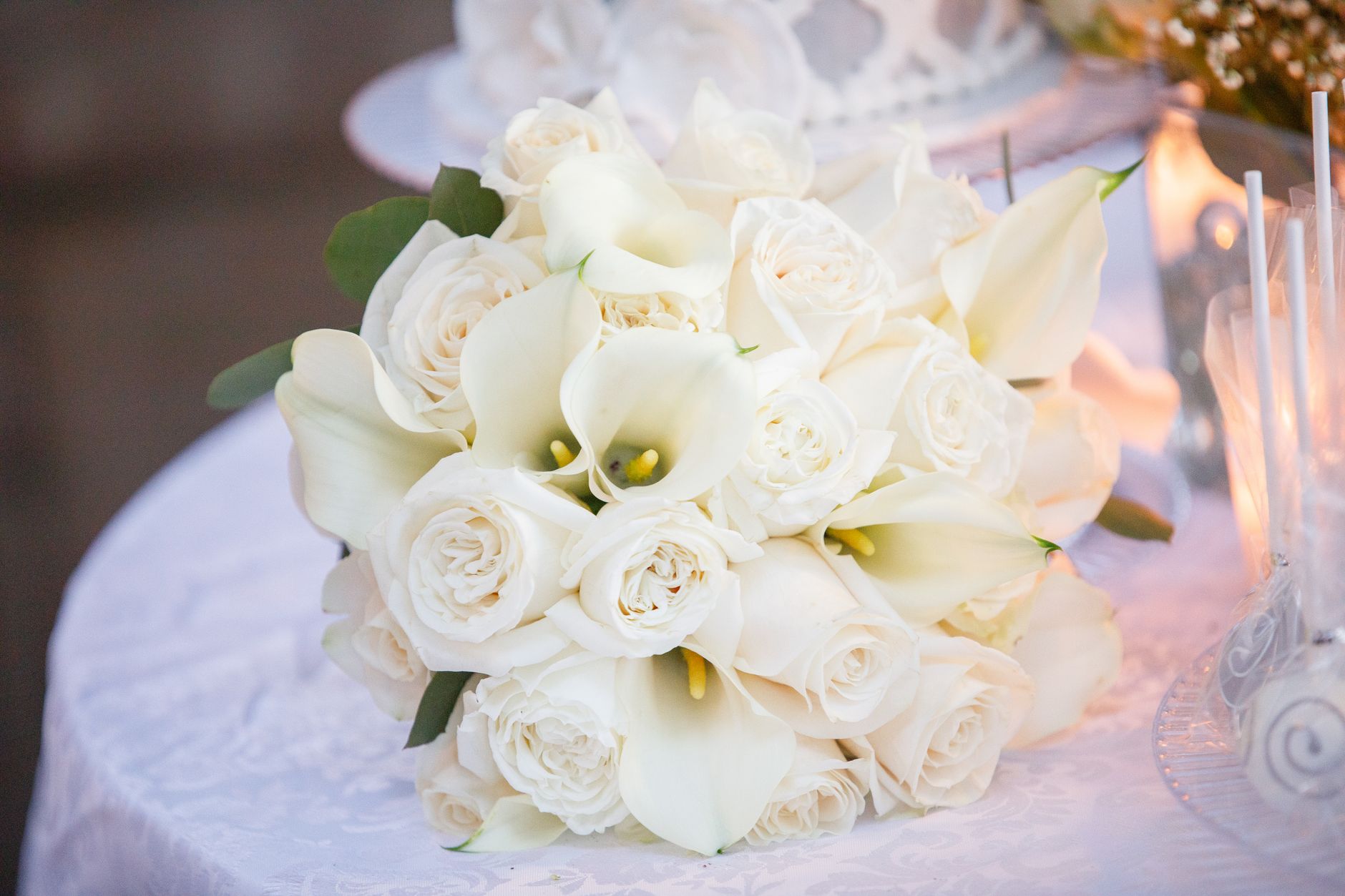
You are engaged. Congratulations. At some point in the next few months, someone — a planner, a parent, a bridal magazine, a Pinterest board — is going to ask you about flowers. And you are going to discover that wedding flowers exist in a pricing universe that makes no sense to anyone who has never planned a wedding before.
We are florists. We make wedding flowers. And we are going to tell you everything the industry usually makes you figure out the hard way: what things actually cost, why they cost that, where to spend, where to save, and how to get the wedding flowers you want without the budget shock that sends half of all couples into a quiet panic at the first consultation.
💰 The Real Cost Ranges
Every wedding is different, but here are the ranges we see most often. These are retail florist prices — not DIY wholesale, not luxury event design, not the $47 grocery store bouquet. Real florist work, designed and delivered.
Personal flowers (what people carry or wear):
- Bridal bouquet: $150–$350. This is the centerpiece of the personal flowers. A simple hand-tied bouquet of roses and greenery is on the lower end. A lush, garden-style bouquet with peonies, garden roses, ranunculus, and trailing ribbons is on the higher end. Cascading bouquets and orchid-heavy designs can push past $400.
- Bridesmaid bouquets: $65–$125 each. Smaller and simpler than the bridal bouquet, but coordinated in color and style. Multiply by the number of bridesmaids — this line item adds up fast.
- Boutonnieres: $15–$30 each. A single bloom with greenery pinned to a lapel. Groom, groomsmen, fathers, officiant — count the lapels.
- Corsages (mothers, grandmothers): $30–$55 each. Wristlet or pin-on. Often overlooked in early planning and then rushed at the end.
- Flower girl petals or pomander: $25–$60. A small basket of petals or a kissing ball on a ribbon.
Ceremony flowers:
- Altar or arch arrangement(s): $150–$500+ per arrangement. A simple pair of vase arrangements flanking the altar is on the lower end. A full floral arch is $800–$2,500+ depending on density and flower choice. This is one of the biggest swing items in any wedding flower budget.
- Aisle markers / pew flowers: $30–$75 each. Small arrangements or single stems tied with ribbon. You do not need one on every row — every other or every third is plenty.
- Loose petals for the aisle: $50–$150 depending on quantity and flower type.
Reception flowers:
- Centerpieces: $75–$200+ each. This is the other big swing item. A simple low arrangement in a glass vase is $75–$100. A lush, overflowing garden-style centerpiece is $150–$200. Tall arrangements on risers or candelabras start at $200 and go up from there. Multiply by the number of tables.
- Head table arrangement: $150–$400. Usually longer and more elaborate than guest table centerpieces.
- Cake flowers: $50–$150. Fresh flowers on a wedding cake are one of the best values — they transform a simple cake into a showpiece for relatively little money.
- Cocktail hour / bar flowers: $40–$80 each. Small bud vases or compact arrangements.
- Restroom flowers: $25–$50 each. A tiny touch that guests notice and remember.
Total budget tiers (approximate):
- $500–$800: Bridal bouquet, a few boutonnieres, one ceremony arrangement, no centerpieces (or DIY centerpieces). Intimate wedding or elopement.
- $1,200–$2,000: Full personal flowers, simple ceremony arrangements, modest centerpieces for 8–10 tables. The sweet spot for most couples.
- $2,500–$4,000: Lush personal flowers, ceremony arch or substantial altar pieces, generous centerpieces, head table, cake flowers, cocktail arrangements. A full floral wedding without going over the top.
- $5,000+: Premium flowers (peonies, garden roses, orchids), elaborate ceremony installation, tall or large centerpieces, additional decor. Event-level floral design.
📈 What Drives the Price
Wedding flowers are not expensive because florists are greedy. They are expensive because of real inputs that most people do not see:
- Flower type. Standard roses cost $2–$4 per stem wholesale. Garden roses cost $5–$8. Peonies in season are $8–$12. Peonies out of season (if available at all) can be $15–$20. Lily of the valley — the royal wedding flower — is $8–$15 per tiny stem. The species you choose is the single biggest price driver.
- Season. In-season flowers cost less, last longer, and look better. Out-of-season flowers must be imported from farther away (often South America or Holland), cost more, and are less reliable. More on seasonal choices below.
- Quantity. A lush, full bouquet uses 25–40 stems. A sparse, airy bouquet uses 12–18. Same design style, very different cost.
- Labor. A hand-tied bouquet takes 30–45 minutes to design. A cascading bouquet takes 60–90 minutes. Boutonnieres take 10–15 minutes each. Centerpieces take 20–40 minutes each. A full wedding’s worth of flowers represents 15–30+ hours of skilled design labor.
- Delivery and setup. Getting flowers to the venue, setting up ceremony arrangements, placing centerpieces, and sometimes striking everything afterward. This is usually 2–4 hours of staff time plus vehicle costs. Many florists charge $75–$200+ for delivery and setup, and it is worth every penny.
🌼 The Biggest Bang-for-Buck Flowers
If you want beautiful wedding flowers without the premium price, lean into these:
- Carnations. Yes, really. The carnation had a reputation problem for decades, but the modern varieties — large, ruffled, available in dozens of colors — are having a serious moment. They are affordable ($1–$2/stem), extraordinarily long-lasting, and look lush in large quantities. A monochrome white carnation bouquet or centerpiece is stunning.
- Stock. Tall, fragrant spikes in white, pink, purple, and cream. Incredible value because each stem adds height and volume. One of the best-kept secrets in wedding floristry.
- Lisianthus. Often called “the budget garden rose” — ruffled, elegant, available in white, blush, purple, and green. Each stem has multiple blooms, so you get more visual impact per dollar.
- Chrysanthemums. The football-mum-at-homecoming stigma is outdated. Modern disbudded chrysanthemums are large, architectural, and available in beautiful muted tones. Spider mums add drama. Cushion mums add texture.
- Spray roses. Smaller than standard roses but with 4–6 blooms per stem. Excellent for filling out bouquets and centerpieces at a fraction of the cost of garden roses.
- Greenery-forward designs. Eucalyptus, Italian ruscus, salal, and fern are less expensive than blooms and create a lush, organic look. A greenery-heavy arrangement with a few focal flowers is one of the most cost-effective and trend-forward approaches right now.
Budget busters to know about:
- Peonies — gorgeous but expensive and only in season May–June. Out-of-season availability is limited and costly.
- Orchids — elegant but labor-intensive to work with. Phalaenopsis stems are fragile and need careful handling.
- Lily of the valley — tiny, delicate, wildly expensive. A bridal bouquet of pure lily of the valley can cost $500+ because of the sheer number of stems needed.
- Anything out of season — if your florist has to source it from another hemisphere, the price reflects that journey.
🌸 Wedding Flowers by Season
The smartest budget decision you can make is choosing flowers that are naturally in season at your wedding date. Here is what is available and abundant in Oregon and Northern California:
Spring (March–May):
- Tulips, ranunculus, anemones, sweet peas, peonies (late May), lilac, hyacinth, daffodils
- Best for: soft, romantic, pastel palettes. Garden-style bouquets.
Summer (June–August):
- Dahlias, sunflowers, zinnias, lisianthus, garden roses, delphinium, stock, snapdragons, hydrangea
- Best for: bold color, abundant volume, lush arrangements. Peak availability = best pricing.
Fall (September–November):
- Dahlias (peak), chrysanthemums, marigolds, celosia, amaranthus, ornamental grasses, rose hips, fall foliage
- Best for: warm tones, rich textures, moody palettes. Burgundy, rust, gold, deep orange.
Winter (December–February):
- Roses (year-round), carnations, anemones (start late winter), ranunculus (start late winter), evergreen branches, berries, amaryllis, hellebores
- Best for: elegant simplicity, white and green palettes, holiday textures. Fewest local options but imported availability is good.
✅ The Pieces Most Couples Skip (and Shouldn’t)
- Parent flowers. A corsage or small bouquet for the mothers and grandmothers. It costs $30–$55 per person and makes them feel included. This is the most commonly forgotten item — and the one parents remember most.
- A toss bouquet. If the bride wants to do a bouquet toss, use a smaller, inexpensive bouquet ($40–$60) instead of throwing the real one. The bridal bouquet can then be preserved as a keepsake. We wrote a full guide to preserving flowers after they fade — wedding bouquets are the #1 candidate.
- Cake flowers. Fresh flowers on the cake are the highest-impact, lowest-cost addition in the entire wedding flower budget. $50–$150 transforms a simple buttercream cake into a magazine photo.
- Restroom arrangements. Tiny. Cheap ($25–$50). And guests always notice them. A small bud vase with a single stem and a sprig of greenery in each restroom says: we thought of everything.
❌ The Pieces Most Couples Overspend On
- Ceremony arches. A full floral arch is breathtaking — and it is seen for approximately 20 minutes of a multi-hour event. If your budget is tight, use a simple greenery drape or two large arrangements flanking the altar instead. Save the flower budget for things guests experience all evening (centerpieces, personal flowers).
- Pew or chair flowers on every row. Nobody looks at them during the ceremony and they are gone before the reception. Every other row, or just the first two rows, is plenty.
- Oversized bridesmaid bouquets. Bridesmaids carry their bouquets for photos and the processional, then set them down. Smaller, simpler bouquets ($65–$85) look great in photos and save hundreds across the wedding party.
- Flowers in the cocktail hour space. Guests are drinking, eating, and talking. They barely register the flowers. A few simple bud vases are sufficient — do not put centerpiece-level arrangements in a space people pass through.
🛠️ DIY vs. Florist: The Honest Breakdown
Some things are genuinely DIY-able. Some are not. Here is the truth:
Good DIY candidates:
- Simple bud vase centerpieces. Buy bud vases in bulk, buy flowers wholesale (or from a flower market), and put 1–3 stems in each vase. This requires no design skill, minimal time, and can look beautiful. Add a candle next to each vase.
- Loose petal scatter. Buy petals in bulk and scatter them on tables or down the aisle. Easy, no skill required.
- Greenery garland. Eucalyptus garland from a wholesale source, draped along a table or mantle. Beautiful, forgiving, and hard to get wrong.
Leave these to a florist:
- The bridal bouquet. It has to be structurally sound enough to survive 8+ hours of carrying, photos, hugging, and possibly a toss. It has to photograph well from every angle. It has to be wired and taped where needed, and the stems have to be wrapped cleanly. This is skilled work.
- Boutonnieres. They look simple but they are fiddly — the pinning mechanics, the stem wrapping, the proportion. A bad boutonniere is very visible in photos.
- Anything that has to survive heat or a long day without water. A florist knows which flowers hold up and how to prep them. A DIY arrangement that wilts by the reception is a heartbreak.
📅 When to Book Your Florist
- Peak season (May–October): Book 6–9 months ahead. Popular florists fill their wedding calendar a year out for peak Saturdays.
- Off-peak (November–April): Book 3–5 months ahead. More availability, but popular dates (Valentine’s weekend, holiday season) still fill up.
- What happens when you wait: Your top-choice florist may be booked. Rush sourcing may limit flower selection. Design time gets compressed, and substitutions become more likely.
💬 How to Talk to Your Florist
The consultation is where everything comes together. Here is how to make it productive:
- Bring images. Pinterest boards, Instagram saves, magazine clippings — anything that shows the vibe you want. A florist can work with “I want something like this” far more easily than “I want something romantic and natural.”
- State your budget upfront. Do not be embarrassed. Florists work with every budget, and knowing the number lets them design to it rather than presenting options you cannot afford.
- Trust the substitutions. If your florist suggests a different flower than the one you pinned, it is usually because the alternative is fresher, more available, more affordable, or better suited to your date and venue. This is expertise, not upselling.
- Tell them about the venue. Indoor vs. outdoor, lighting, table size, ceiling height, color of the walls — all of this affects design choices. A photo of the empty venue is incredibly helpful.
- Ask about repurposing. Can the ceremony arrangements be moved to the reception? Can the bridal bouquet sit on the head table? Repurposing is the oldest budget trick in wedding floristry and a good florist will plan for it.
💐 Let’s Talk About Your Wedding
We design wedding flowers for couples across our delivery area — from intimate elopements to full-scale celebrations. Whether your budget is $500 or $5,000, we will design something beautiful, honest, and exactly right for your day.
Browse our arrangements for inspiration, explore our plants and gifts, or reach out directly to start a wedding consultation. We love this work, and we would love to be part of your day. 💐