Every week someone asks us: “What do roses mean?” “Is it bad to send white flowers?” “Do yellow roses mean friendship or jealousy?” “What flower means I’m sorry?”
And every week we give the same honest answer: it depends on who you ask, when you ask, and whether either of you actually cares.
Flower symbolism is real. It is also made up. It is ancient in some cases and Victorian-era marketing in others. Some meanings are deeply cultural and worth knowing. Others are from a book published in 1884 that nobody read then and nobody should take seriously now. Here is the whole truth.
🏰 Where Most Flower Meanings Come From
The “language of flowers” — floriography — was a craze in Victorian England and France during the 1800s. The premise: since polite society could not express emotions directly (especially romantic or scandalous ones), people assigned meanings to flowers and sent coded bouquets instead.
The problem: there was no single dictionary. Dozens of books were published with contradicting meanings. A yellow rose meant “jealousy” in one book and “friendship” in another. A hydrangea meant “heartlessness” in England and “gratitude” in Japan. The system only worked if both parties owned the same book — and they usually did not.
Most of the “flower meanings” you see on websites today are cherry-picked from these Victorian sources, presented as ancient universal truths. They are not. They are parlor games from bored aristocrats who had too much time and not enough texting.
That said — some meanings stuck. Some are genuinely useful. And some are culturally important enough that you should know them before sending flowers internationally. Here is the real guide.
🌹 Roses (The One Everyone Asks About)
Roses have the most established symbolism of any flower, mostly because they have been cultivated for 5,000 years and every civilization has had opinions about them.
- Red roses: Romantic love. This one is universal and unambiguous. If you send a dozen red roses, you are saying something. Everyone knows what. This meaning predates the Victorians by millennia — it is genuinely ancient.
- Pink roses: Gratitude, admiration, gentleness. Safe for any relationship. The “I appreciate you” rose. Also the most popular rose color for Mother’s Day, and nobody thinks it means romance.
- White roses: Purity, reverence, remembrance. Common in sympathy arrangements and weddings. In some Asian cultures, white flowers are associated with funerals — context matters (more on this below).
- Yellow roses: The contested one. Victorian books said jealousy. Modern usage says friendship, joy, warmth. In practice: nobody receiving yellow roses in 2026 thinks you are jealous of them. They think you sent cheerful flowers. The Victorian meaning is dead.
- Orange/coral roses: Energy, enthusiasm, desire. A warmer-than-pink, less-serious-than-red middle ground. Good for new relationships or when red feels too intense.
- Lavender roses: Enchantment, uniqueness. The “I think you are extraordinary” rose. Also: just a beautiful color that people love regardless of meaning.
🌺 The Other Flowers Everyone Asks About
- Lilies: Purity, rebirth, devotion. Strongly associated with funerals and sympathy in Western culture. White lilies specifically evoke peace and the afterlife. But pink and orange lilies are cheerful and celebratory — context is everything.
- Tulips: Perfect love (red), cheerfulness (yellow), elegance (purple). In the Netherlands, tulips just mean “spring” because they are everywhere. The Ottoman Empire considered them sacred. Mostly: tulips mean freshness and optimism and nobody overthinks it.
- Sunflowers: Loyalty, adoration, happiness. They literally follow the sun (when young). Hard to assign a negative meaning to something this cheerful. Universally safe to send to anyone for any reason.
- Peonies: Prosperity, romance, good fortune. Extremely significant in Chinese culture where they are the “king of flowers.” In Western weddings, they just mean “lush and beautiful.” In practice: everyone loves peonies and nobody questions why you sent them.
- Orchids: Luxury, beauty, strength. In Victorian times they meant “exotic seduction” (because Victorians were repressed). Now they mean “sophisticated gift” and “I spent more than $30.”
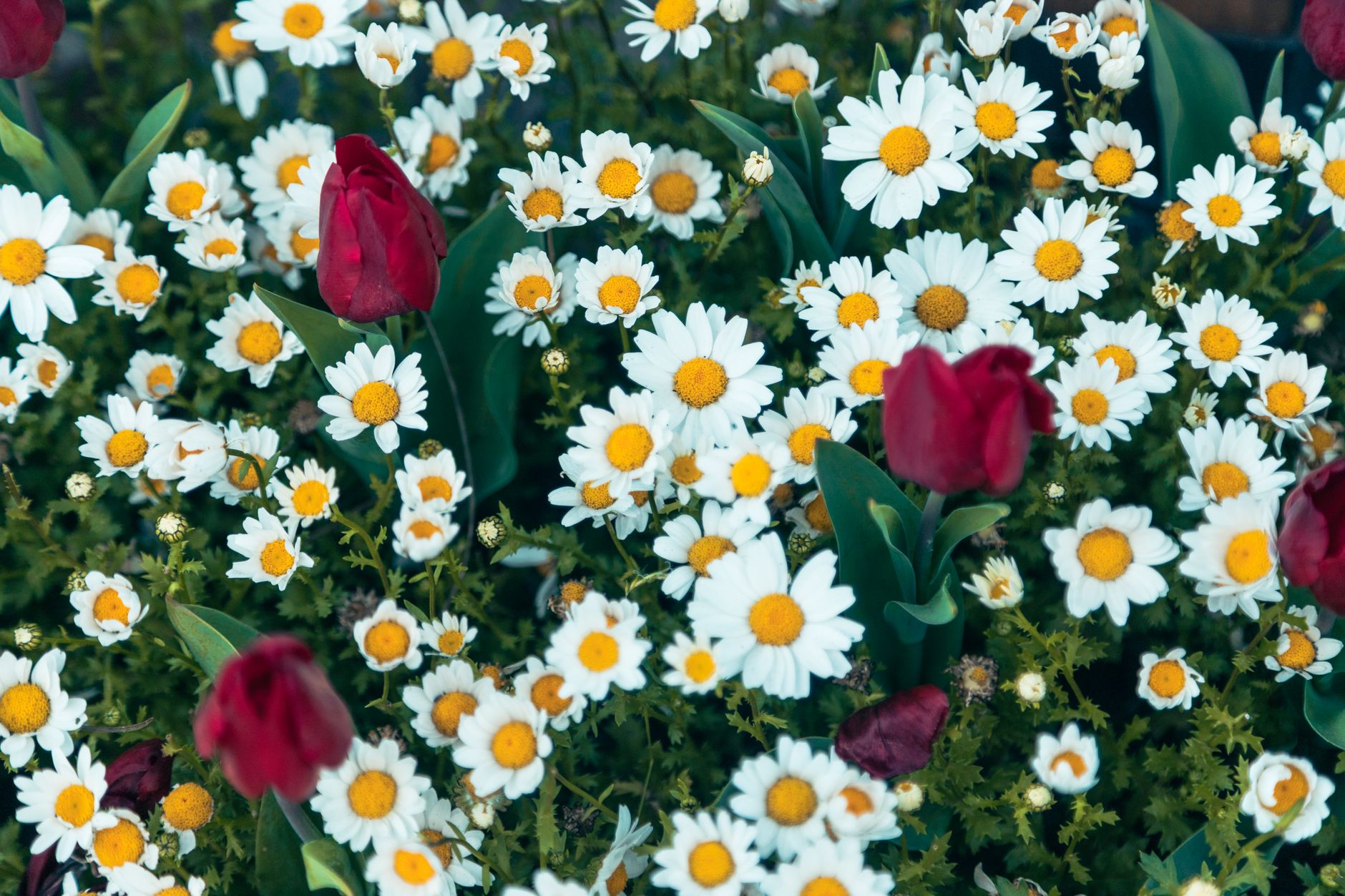
- Daisies: Innocence, simplicity, cheerfulness. The most uncomplicated flower symbolically. Nobody has ever been offended by daisies. They are the golden retriever of flowers.
- Hydrangeas: Gratitude and heartfelt emotion in Japan. Heartlessness and vanity in Victorian England. In 2026 America: “I love that blue color” and “these fill out an arrangement beautifully.” The negative meaning is completely dead.
- Carnations: The underestimated flower. Red = deep love. White = pure love and good luck. Pink = gratitude (specifically associated with Mother’s Day since 1907). The unfair reputation as “cheap” is a marketing problem, not a meaning problem. Carnations last longer than almost any cut flower and have genuine historical significance.
- Lavender: Devotion, serenity, calm. This one actually tracks — the plant has been used for relaxation and medicine for centuries. The meaning and the function align.
- Chrysanthemums: Longevity and joy in most of Asia (especially Japan, where they are the imperial flower). In parts of Europe, they are strictly funeral flowers. In the U.S., they are “fall flowers” and nobody attaches deep meaning. Important: do not send chrysanthemums to someone from France, Italy, or Belgium as a cheerful gift. They will think someone died.
🌍 The Cultural Layer (This Part Actually Matters)
Most flower “meanings” are harmless — nobody will be offended if you send daisies without knowing they mean innocence. But cultural associations are different. These are worth knowing:
- White flowers in many Asian cultures: Associated with funerals and mourning. Sending an all-white arrangement to celebrate a happy occasion for someone Chinese, Japanese, Korean, or Vietnamese may land wrong. Mix in color or ask.
- Chrysanthemums in Southern Europe: Funeral flowers in France, Italy, Spain, Belgium, and parts of Eastern Europe. Sending them for a birthday in Paris is a genuine faux pas.
- Yellow flowers in parts of Latin America and Eastern Europe: Can signify separation, jealousy, or death in some traditions. Not universal, but worth a pause if the recipient has roots in these regions.
- Even numbers in Eastern Europe: Bouquets with an even number of stems are for funerals in Russia, Ukraine, and other Slavic countries. Always send an odd number (3, 5, 7, 9) for happy occasions.
- Red and white together in parts of the UK: Associated with blood and bandages (hospital symbolism). Mostly an older generation concern, but some British recipients may notice.
When in doubt: ask the recipient’s family or friends about cultural preferences. Or tell your florist — we navigate this regularly and can help you avoid a misstep.
😏 The Honest Florist Take
Here is what we know after years of making and delivering thousands of arrangements:
Nobody has ever been upset because a flower “meant” the wrong thing. Not once. In two decades of delivering flowers, nobody has called to say “you sent hydrangeas and those mean heartlessness!” or “why did you include yellow roses? Are you saying you’re jealous of me?”
People are upset when:
- Flowers arrive dead or wilted
- Flowers arrive late
- The arrangement looks cheap or sloppy
- The wrong name is on the card
- The flowers do not match what was ordered
People are never upset because a snapdragon technically symbolizes “deception” in an 1884 book they have not read. Meaning is a bonus layer, not a risk factor. Beautiful flowers, delivered on time, with a thoughtful card — that is what matters. The symbolism is dessert, not the meal.
❤️ The Only Meaning That Actually Matters
The most powerful flower meaning is the one you assign yourself:
- “I sent you peonies because they remind me of your garden.”
- “Sunflowers because you light up every room.”
- “Lavender because it smells like the trip we took together.”
- “These are the same flowers you carried at your wedding.”
- “Your mom loved iris, so I am sending you iris today.”
That kind of meaning — personal, specific, rooted in your actual relationship with the recipient — is infinitely more powerful than anything a Victorian etiquette book assigned 150 years ago. It does not matter what the internet says a lily means. It matters what you mean when you send one.
Write it on the card. Tell the story in one sentence. That is the language of flowers.
Curious about your own birth month flower? Read our birth month flower guide.