
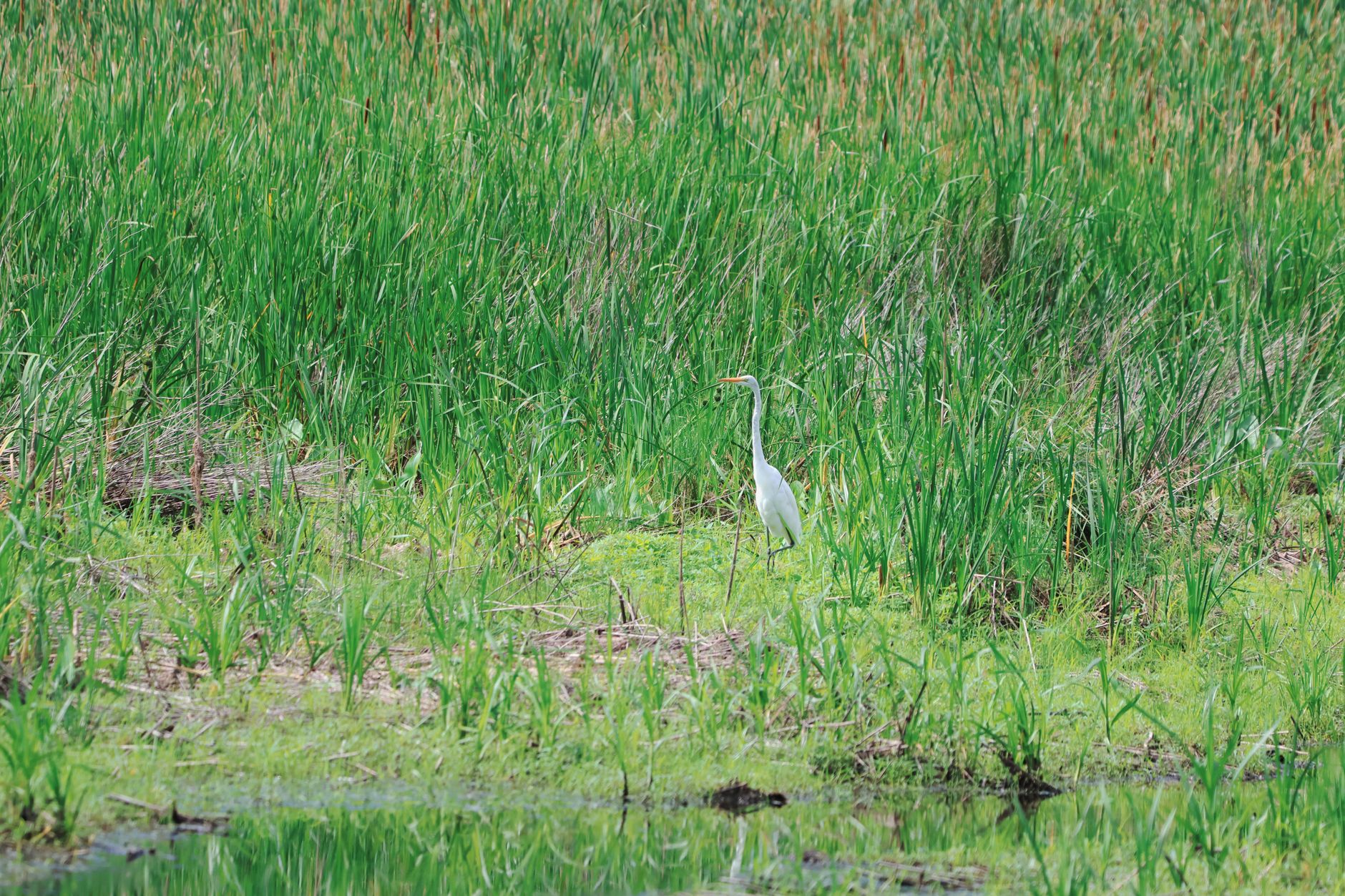
There is an 1,856-acre national wildlife refuge sitting right next to Tualatin and Sherwood, managed by the U.S. Fish and Wildlife Service, open to the public, free to visit, and still somehow unknown to a surprising number of people who live five minutes away. If you have driven past the signs on 99W and thought, “I should check that out sometime,” this is your sometime.
The Tualatin River National Wildlife Refuge is not a city park. It is not a paved trail loop with a coffee cart. It is a real refuge — wetlands, oak savanna, riparian forest, and open prairie managed for wildlife habitat — and in April, it is one of the most quietly beautiful places in the entire Portland metro area.
🌸 What’s Blooming in April?
The refuge protects several habitat types, and each one has its own spring bloom cycle. In a typical April, you can expect to see:
- Camas — the signature native wildflower of the Tualatin Valley, with blue-purple spikes in the wet prairie sections that can be stunning when a whole field is peaking
- Oregon grape — bright yellow flower clusters on the low evergreen shrub, common along forest edges and trail margins
- Red-flowering currant — drooping pink-red clusters that hummingbirds love, often visible from the trail before you notice the shrub itself
- Trillium — white three-petaled blooms on the forest floor in the wooded sections
- Skunk cabbage — the bright yellow, slightly absurd wetland plant that announces spring in every soggy corner of the Pacific Northwest
- Meadow wildflower mixes — buttercups, spring beauties, checkermallows, and other small bloomers in the open grassland areas
- Cottonwood and willow catkins — not flowers in the traditional sense, but the fuzzy catkins along the river corridor are part of the spring texture
The camas is the headliner. When the wet prairie sections are in full bloom, the blue-purple carpet effect is genuinely striking — and it is a direct connection to the Kalapuya people who managed these prairies with fire for thousands of years. This is not accidental wildflower meadow. It is restored habitat on historically significant ground.
🚶 Best Trail for April
The main public access is through the Atfálati Trail system (named for the Atfalati band of the Kalapuya). The interpretive loop from the visitor center area takes you through riparian forest, along wetland overlooks, through oak habitat, and past open prairie. The full loop is moderate, flat, and manageable for most fitness levels.
For wildflowers specifically, the prairie and wetland-edge sections are the richest. In April, these areas are green, wet, and actively blooming. The forested sections are quieter but still worth walking for trillium and woodland understory.
The refuge does have seasonal trail closures to protect nesting habitat, so check the current access before you go. The visitor center (when open) has maps and seasonal info. The U.S. Fish and Wildlife Service website also posts updates.
🦅 Wildlife in Spring
April is migration and nesting season, which means the refuge is at its most biologically active right now. Depending on the day and the weather, you might see:
- Great blue herons — nesting in the tall trees near the wetlands
- Red-tailed hawks and Cooper’s hawks — hunting over the open grassland
- Migratory songbirds — warblers, swallows, and flycatchers arriving from the south
- Wood ducks, mallards, and other waterfowl on the ponds and river channels
- Deer in the early morning along the forest edges
- Turtles basking on logs in the warmer wetland areas
- Nutria — the large, semi-aquatic rodent that is not native but is very much present (and surprisingly untroubled by your existence)
Bring binoculars if you have them. Even without them, herons and hawks are hard to miss.
🌊 Why It Feels Like a Secret
The refuge does not advertise like a city attraction. There is no branded signage campaign. There are no food trucks. The parking lot is not designed for overflow crowds. And because it is managed for wildlife first and visitors second, it has a calm, unhurried quality that most urban-adjacent parks cannot match.
That combination — proximity plus quiet plus genuine ecological value — is what makes it feel like a secret even though it has been here for decades. You are standing in nearly 2,000 acres of protected wetland and prairie, less than a mile from 99W, and the loudest sound is usually a red-winged blackbird arguing with another red-winged blackbird about territory.
📍 How It Connects to the Rest of Tualatin
The refuge sits between Tualatin and Sherwood, which means you can easily pair a visit with other local outings. If you want more walking, our spring walks guide covers the broader trail network from Bridgeport to Stafford. If you want the paved-trail version, the Tualatin River Trail is a different experience — urban greenway versus wild refuge — but both follow the same river system.
And if the refuge puts you in a Sherwood mood, our Sherwood Old Town guide covers coffee, food, and Main Street charm just a few minutes south.
🌿 What the Refuge Has to Do with Flowers
More than you might think. The camas fields at the refuge are a reminder that the Tualatin Valley has been a flower landscape for thousands of years. The prairies that the Kalapuya managed were not wilderness in the modern sense — they were cultivated, fire-maintained ecosystems designed to support specific plants, including camas, which was a staple food.
That same landscape is what makes this valley so good for growing things today. The soil, the moisture pattern, the mild winters, and the long spring growing season are all part of why Oregon-grown flowers exist at all. When a florist here puts seasonal stems in an arrangement, there is a direct line between those flowers and the same valley conditions that the refuge is preserving.
💐 Flowers After the Refuge?
Highly likely. The refuge has the same effect that all good natural spaces have: you spend an hour surrounded by wild bloom, birdsong, and green light filtered through cottonwoods, and then you come home and notice your house could use a little of that energy.
At tualatinflorist.com, we deliver fresh flowers daily across Tualatin, Sherwood, Lake Oswego, Tigard, Stafford, Durham, and the surrounding southwest metro. If a spring morning at the refuge leaves you wanting a little wildflower energy at home, we can absolutely help with that. 🌸🚚