
Tualatin has not always smelled great after dark.
Older residents — the ones who were here in the 1950s through the 1980s — will tell you about the Hervin Company, the pet food factory that sat right along Nyberg Road where the Tualatin Commons and the Century Hotel stand today. Jason Hervin purchased the operation in 1952 and expanded it into a major producer of Blue Mountain pet foods, with up to 220 employees cranking out 250,000 one-pound cans and 200,000 pounds of dry pet food every single day. Before Hervin, the site was the Westward Packing Company, which processed horse meat for human consumption on one side and pet food on the other. The delivery trucks carried the slogan “Going to the Dogs.”
And the smell? According to Willie Crossway, who worked for Hervin Company for 34 years starting as a meat grinder in 1952, the noxious odors from the plant caused “lots of nose holding” around town. If you lived in Tualatin in those decades, the evening air carried something very different from jasmine.
and now that land is the Tualatin Commons — the lake, the walking path, the splash pad, the heart of modern Tualatin.All of which is to say: Tualatin has earned the right to smell good at night. And if you plant the right flowers, it will.
🌜 Why Some Flowers Wait for Dark
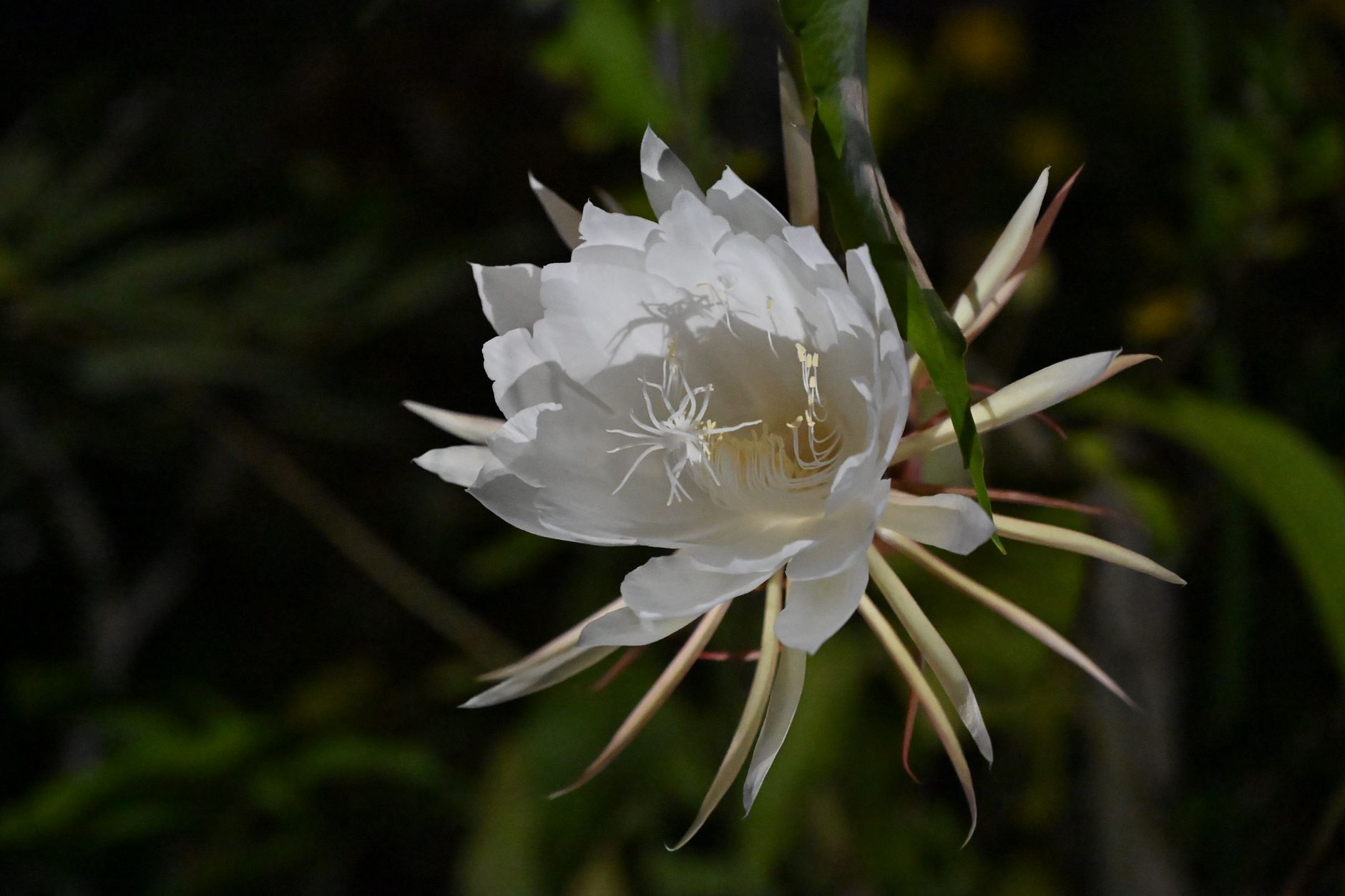
Most flowers bloom during the day because most pollinators — bees, butterflies, hummingbirds — are active in daylight. But a significant group of flowers has evolved to do the opposite: they open at dusk, release their strongest fragrance after dark, and close again by morning. These are moth-pollinated flowers, and they play by different rules.
Moths navigate by moonlight and starlight. They cannot see bright colors well, but they see white and pale tones clearly against dark foliage. They find flowers primarily by scent, which is why night-blooming flowers tend to be intensely fragrant — far more so than their daytime cousins. The fragrance release is triggered by the drop in temperature at dusk and the onset of darkness, which signals the flower to open and begin producing volatile scent compounds.
The result: a garden that looks quiet and green all day, then transforms at sunset into something that glows white in the fading light and fills the air with perfume. It is called a moon garden, and it is one of the most rewarding things you can grow — especially in the Pacific Northwest, where summer evenings are long, mild, and made for sitting outside.
🌼 The Best Night-Blooming Flowers for Tualatin (Zone 8b)
Not every night bloomer thrives in our climate. Here are the ones that do:
- Moonflower (Ipomoea alba) — the queen of the night garden. Large, pure white trumpet-shaped blooms that unfurl at dusk and close by mid-morning. The fragrance is sweet and tropical. Grows as a fast annual vine in our zone — give it a trellis, a fence, or an arbor and it will cover it by August. Plant seeds after the last frost (mid-May in Tualatin).
- Evening primrose (Oenothera species) — bright yellow or white flowers that pop open at sunset so quickly you can almost watch it happen. Some species are native to Oregon. The showy evening primrose (O. speciosa) is particularly beautiful in pink and white. Drought-tolerant and easy to grow.
- Night-scented stock (Matthiola longipetala) — a humble-looking annual with small lilac flowers that close during the day and look like nothing special. Then evening comes and the fragrance is extraordinary — sweet, spicy, honey-like, and strong enough to scent an entire patio. Sow seeds directly in the garden. One of the easiest and most rewarding night flowers to grow.
- Nicotiana (flowering tobacco, Nicotiana sylvestris or N. alata) — tall, elegant white tubular flowers that droop during the heat of the day and perk up at dusk with a sweet, jasmine-like fragrance. The tall woodland tobacco (N. sylvestris) can reach 4–5 feet and makes a dramatic back-of-border statement. Grows as an annual in Zone 8b.
- Four o’clocks (Mirabilis jalapa) — named because they open in the late afternoon. Available in magenta, yellow, white, pink, and multi-colored. Mildly fragrant. They grow like weeds (in a good way), reseed freely, and bloom from mid-summer until frost. One of the toughest, most forgiving night-ish flowers you can plant.
- Angel’s trumpet (Brugmansia) — enormous, pendulous trumpet-shaped flowers in white, pink, peach, or yellow. The evening fragrance is powerful and intoxicating — heavy, sweet, almost narcotic. Grows as a container plant in our zone (bring it indoors for winter). Important: all parts of this plant are toxic. Beautiful but not for gardens with small children or pets.
- Night phlox (Zaluzianskya capensis) — tiny, star-shaped white flowers that stay closed during the day (showing a dark maroon back) and open at dusk to release a fragrance described as honey, vanilla, and almonds. A South African native that grows well as an annual here. Hard to find but worth seeking out.
⭐ White and Silver Plants That Glow in Low Light
A true moon garden is not only night bloomers. It includes any plant that reflects light after dark — white flowers, silver foliage, and pale-toned blooms that catch moonlight and the last glow of twilight. These are not technically nocturnal, but they perform at dusk in a way that bright colors cannot.
- White roses — the classic. Iceberg, Blanc Double de Coubert, and White Meidiland all thrive in Zone 8b and glow against dark foliage.
- White hydrangea — Annabelle and Limelight varieties are practically luminous in low light. Enormous white or cream blooms on sturdy stems.
- Dusty miller (Jacobaea maritima) — silver-gray, feltlike foliage that reflects moonlight beautifully. A foliage plant, not a flower, but essential for moon garden design. Easy annual.
- Lamb’s ear (Stachys byzantina) — soft, silvery, velvety leaves that glow in dim light. Perennial, drought-tolerant, and virtually indestructible.
- White Japanese anemone (Anemone x hybrida ‘Honorine Jobert’) — elegant white flowers on tall stems that bloom in late summer and fall. One of the most beautiful perennials for PNW gardens.
- Moonbeam coreopsis (Coreopsis verticillata ‘Moonbeam’) — pale yellow, nearly cream flowers that bloom all summer and catch low-angle light beautifully.
- White peonies — breathtaking in May and June. Festiva Maxima and Bowl of Cream are Zone 8b favorites.
- Artemisia (wormwood, Artemisia species) — feathery silver foliage. ‘Silver Mound’ and ‘Powis Castle’ are excellent choices for moon garden borders.
🦋 The Moths
If you build a moon garden, you will meet the moths. And they are far more interesting than their reputation suggests.
- Sphinx moths (hummingbird moths) — large, fast, hovering moths that look and behave almost exactly like hummingbirds. They are the primary pollinators of moonflower, nicotiana, and angel’s trumpet. Watching a sphinx moth work a moonflower vine at dusk is one of the great small spectacles of a PNW summer evening.
- Luna moths — the enormous, pale green, long-tailed moths that look like something from a fairy tale. They are less common in western Oregon than in the eastern United States, but they exist in the Pacific Northwest and are drawn to light-colored, fragrant flowers.
- Nocturnal pollinators you never see — dozens of smaller moth species pollinate flowers at night without anyone noticing. They are as important to the ecosystem as bees are during the day. A moon garden feeds them.
Pro tip: if you want moths in your garden, turn off the porch light — or at least switch to a warm amber bulb. Bright white lights disorient nocturnal pollinators and draw them away from flowers. A dark garden with moonlight and candlelight is better for the moths and better for the ambiance.
🌿 Fragrant Flowers That Peak at Evening
Some flowers bloom during the day but save their strongest fragrance for evening. The temperature drop at dusk slows the evaporation of volatile scent compounds, which means the fragrance hangs in the air longer and more intensely. These are the flowers that make you stop mid-sentence on the patio and say, “Do you smell that?”
- Jasmine (Jasminum officinale) — the most famous evening-fragrant flower in the world. Star jasmine (Trachelospermum jasminoides) is hardier in our zone and produces a similar scent. Plant it near a seating area or a bedroom window.
- Gardenia — thick, creamy white blooms with an intoxicating sweet fragrance that intensifies after sunset. Marginal in Zone 8b outdoors (prefers warmer climates), but excellent as a container plant that summers on the patio.
- Tuberose (Polianthes tuberosa) — waxy white flower spikes with a fragrance so powerful it is used as a base note in perfumery. Grows from bulbs planted in spring. The evening scent is almost overwhelming — in the best way.
- Oriental lilies — Stargazer, Casa Blanca, and other Oriental lily hybrids are day-bloomers, but their fragrance peaks in the cool of the evening. Strong enough to scent an entire yard. We wrote about the most fragrant flowers in arrangements — lilies top the list.
- Heliotrope (Heliotropium arborescens) — clusters of deep purple flowers that smell like vanilla and cherry pie. The fragrance carries well in still evening air.
🏡 Building a Moon Garden in Tualatin
You do not need a large garden. A corner of the yard, a strip along a fence, or a collection of containers on a patio can create a moon garden effect. Here is how to design one:
- Plant white and silver near seating. The point is to enjoy the garden in the evening, so put the most visible plants where you will see them from your chair, your bench, or your patio table.
- Put fragrant plants downwind. In Tualatin, prevailing summer breezes come from the northwest. Plant your night-scented stock, jasmine, and nicotiana where the breeze will carry the fragrance toward your seating area, not away from it.
- Use reflective elements. White gravel or pale stone mulch around plantings catches moonlight. A birdbath or a shallow water feature reflects the sky. White or light-colored pots glow in the dark.
- Add low path lighting. Solar-powered path lights on a warm (amber or soft white) setting. Avoid bright white LEDs — they kill the atmosphere and confuse the moths. Candlelight is even better for a seating area.
- Layer your bloom times. Evening primrose opens first (late afternoon). Four o’clocks follow around 4–5 pm. Moonflowers unfurl at dusk. Night-scented stock releases fragrance as it gets fully dark. A well-planned moon garden has something happening from late afternoon through the full dark of a summer night.
- Combine with your patio setup. We wrote The Tualatin Summer Evening Handbook earlier — everything in that article about table settings, candles, and entertaining pairs perfectly with a moon garden backdrop.
💐 Night-Blooming Flowers in Arrangements
Some of the most intoxicating night-fragrant flowers also work beautifully in cut flower arrangements:
- Tuberose — a florist favorite for evening events and romantic arrangements. The stems last well in water and the fragrance fills a room.
- Stock (Matthiola incana) — the day-blooming cousin of night-scented stock. Intensely fragrant, long-lasting, available in white, pink, purple, and cream. One of the best-value fragrant cut flowers.
- Gardenia — stunning as a single floating bloom in a shallow bowl. Fragile but unforgettable.
- Jasmine — delicate stems that add fragrance and a trailing, organic shape to loose arrangements.
- Oriental lilies — the powerhouse. A single stem of Casa Blanca lily can perfume an entire house.
If you want an arrangement that fills a room with fragrance — especially for an evening dinner party or a romantic gesture — ask us for a fragrant arrangement. We know which flowers carry scent and which just look pretty. There is a difference, and it matters after dark.
🌟 From Dog Food to Moonflowers
Tualatin has come a long way from the days when the evening air carried the aroma of 250,000 cans of Blue Mountain pet food being processed on Nyberg Road. The land where Hervin Company’s factory once stood is now the Commons — the lake, the path, the gathering place. The nose-holding is over. The evening air belongs to you now.
Plant a moonflower. Grow some night-scented stock. Put a white hydrangea where it catches the last light. Sit outside after sunset and breathe in something beautiful. Tualatin has earned it.
Browse our arrangements, plants, and gifts. Same-day delivery to Tualatin, Sherwood, Lake Oswego, Wilsonville, and the surrounding area. 🌙