
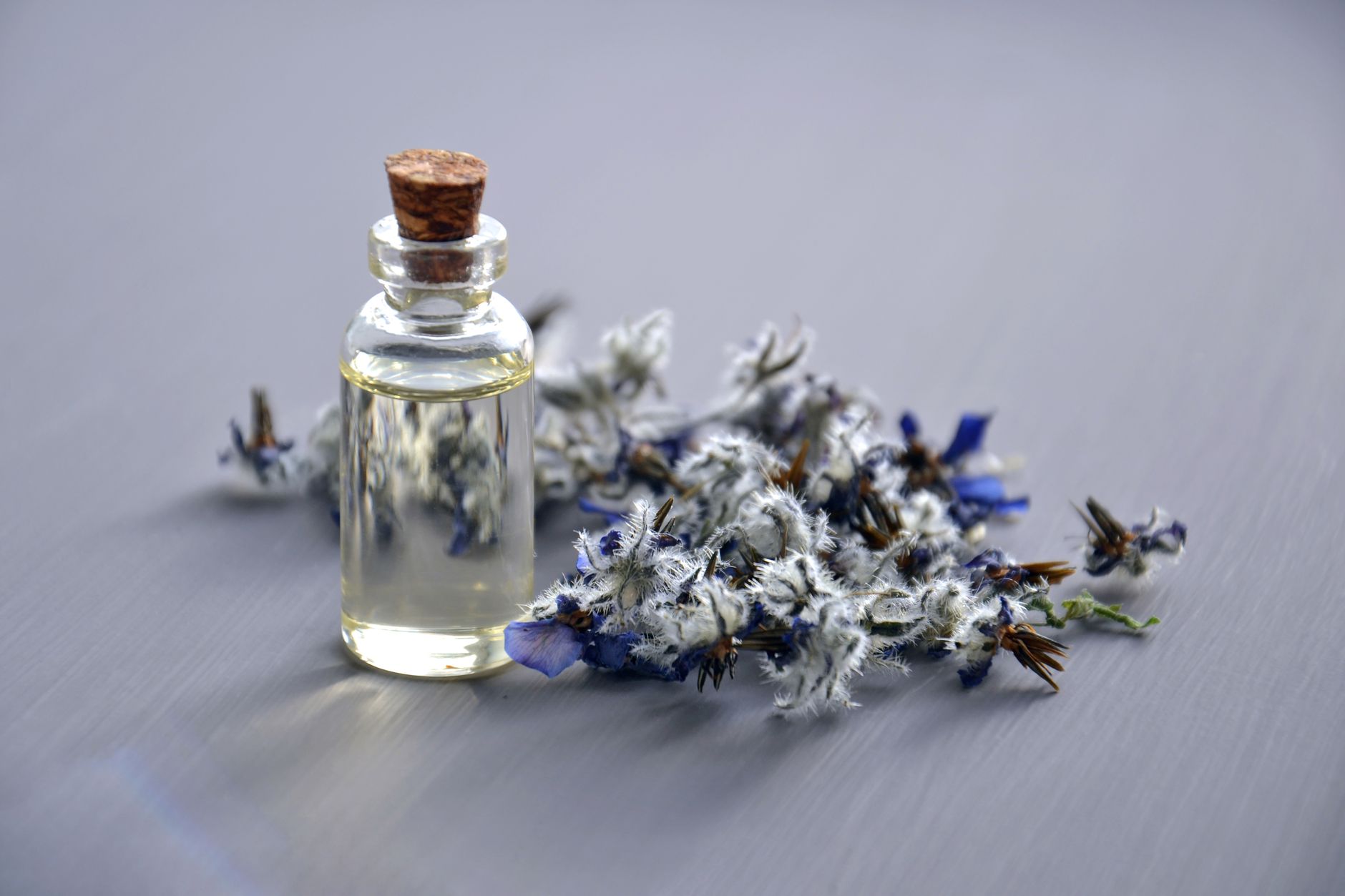
People assume flowers and essential oils are basically the same industry wearing two different hats — grow the flower, squeeze out the scent, bottle it. We wish it were that simple. Some flowers give up their oil easily. Some require an almost absurd volume of raw material to produce a single ounce. And a few of the most popular bouquet flowers we sell every week — genuinely beloved, genuinely fragrant flowers — cannot be turned into real essential oil at all, no matter how much money or technology gets thrown at the problem. Here is the actual science behind the bottle, and what it means for the flowers already sitting in your vase.
💧 Why Some Flowers Get Boiled and Others Get Buried in Fat
Most essential oils are made through steam distillation: hot steam passes through plant material, carries the volatile aromatic compounds along with it, and the resulting vapor is condensed back into oil and water. It works beautifully for hardy plants — lavender, most herbs, many woods and resins — because their fragrance molecules can survive the heat intact. We covered exactly how this plays out for one specific flower in our full lavender guide, including why the lavandin grown commercially for oil is a different plant entirely from the English lavender we use in bouquets.
Delicate flowers are a different story. Jasmine, tuberose, and a handful of other intensely fragrant blooms have aromatic compounds so fragile that steam distillation destroys them before they can be captured, yielding little or no usable oil. The historical solution was enfleurage: fresh petals pressed into layers of odorless fat, left for days as the fat slowly absorbs the fragrance, then washed with alcohol to isolate the aromatic compounds. It is slow, labor-intensive, and largely replaced today by solvent extraction, which uses a chemical solvent instead of fat to pull the same fragrance out gently. Both methods produce something technically called an absolute rather than a true essential oil — a meaningful distinction in perfumery, even if the bottle on a shelf rarely bothers to explain the difference.
🌹 What 60,000 Roses Actually Buys You
Here is the number that puts the price of real rose oil in perspective: producing a single ounce of genuine Bulgarian rose otto — the gold standard, distilled from Rosa damascena in Bulgaria's famous Rose Valley — takes the petals of roughly 60,000 roses, harvested by hand in the early morning before the day's heat can evaporate their fragrance, and processed the same day. That is somewhere around 180 pounds of fresh petals reduced down to about 28 grams of oil. It is one of the most genuinely labor-intensive luxury goods still produced anywhere in the world, and it is a big part of why real rose oil costs more per ounce than gold while a dozen roses at the counter costs what it does. We got into the varieties and vase-life side of the same flower in our complete rose guide — between the two, roses may be the single most economically interesting flower we sell.
🚫 The “Mute Flowers” Perfumers Cannot Crack
This is the fact that genuinely surprises most customers: peony and lily of the valley — two of the most requested bouquet and wedding flowers we handle — have no true essential oil or absolute anywhere on the market. Perfumers call them mute flowers. Their fragrance molecules are so unstable that neither steam distillation nor solvent extraction can capture them without destroying the scent entirely. Every “peony” or “lily of the valley” fragrance you have ever smelled in a candle, lotion, or perfume is a synthetic reconstruction, built by chemists analyzing the flower's actual scent molecules in the air around a living bloom and then recreating the effect from other aromatic ingredients. It smells like the flower. It was never, at any point, inside the flower.
We find this oddly reassuring, honestly. It means the only way to actually experience real peony fragrance is the same way people always have — standing next to a real one.
🍋 The Oils Worth Actually Having in the House
If you want your home to smell like something we would recognize, a few genuinely well-regarded, easy-to-find options pull double duty with flowers we already work with constantly:
- Lavender essential oil — the most studied calming scent in aromatherapy, and a near-perfect match if you already keep dried lavender stems around, as covered in the lavender guide above.
- Neroli (orange blossom) oil — distilled specifically from orange blossoms, not the fruit, and the exact scent behind the citrus arrangement trend we wrote about in our recent citrus blossom guide. If you loved that bright yellow lemonade-palette look, neroli is how you make the room smell like it too.
- Rose otto or rose absolute — genuinely expensive for the reason explained above, but a single drop goes a very long way, and nothing else smells quite like it.
🐾 A Real Word of Caution, Especially for Cat Owners
Before diffusing any of this at home, a genuinely important safety note: cats lack a specific liver enzyme (glucuronyl transferase) that most mammals use to break down and clear the compounds found in essential oils. That means oils that are perfectly fine around dogs or people can build up to dangerous levels in a cat's system from surprisingly small exposure — through inhalation from a diffuser, absorption through the skin, or grooming it off their fur. Tea tree, citrus oils, eucalyptus, and pennyroyal are among the most dangerous, but the safest approach with any cat in the house is to skip the diffuser entirely, or run it only in a room the cat cannot access with the door closed. It is the same logic behind why we always ask about pets in the house before recommending certain cut flowers, and it applies just as much to what comes out of a diffuser as what goes in a vase.
Flowers and their oils are two genuinely different products with two genuinely different sets of rules — one lives in water for a week, the other can sit on a shelf for years, and neither one is quite as simple as it looks from the outside.